

Medically reviewed by Dr. Samir Pancholi, Double Board-Certified Cosmetic Surgeon, on September 1, 2026
Not every body carries excess skin and fat in the same place, which is exactly why there isn’t just one version of a tummy tuck. For patients dealing with looseness that wraps around toward the hips or lower back, a standard abdominoplasty sometimes doesn’t go far enough to address the full picture.
That’s usually where the extended tummy tuck enters the conversation, and for a lot of people researching their options, it’s the first time they’re even hearing the term. An extended tummy tuck builds on the traditional procedure by treating a wider area of the body, which makes it a common recommendation for patients who’ve experienced major weight loss or significant changes after multiple pregnancies. It’s a more involved surgery than a standard tummy tuck, which means it comes with its own set of considerations worth understanding before moving forward.
In this guide, we’ll walk through what an extended tummy tuck actually involves, who tends to be a good candidate, what scarring typically looks like, how weight factors into candidacy, and what the procedure generally costs.
What Is an Extended Tummy Tuck?
Before comparing this procedure to other options, it helps to understand exactly what makes it different from a standard tummy tuck in the first place.
An extended tummy tuck removes excess skin and fat not just from the front of the abdomen, but also extends around toward the hips and sometimes into the lower back, addressing what’s often called the “love handle” area.
Like a traditional tummy tuck, it also typically involves tightening abdominal muscles that have stretched or separated, but the incision runs longer to reach that wider treatment area. This expanded scope is exactly why it’s often recommended for patients whose concerns go beyond just the front of the midsection.

Who’s a Good Candidate for an Extended Tummy Tuck?
Understanding what the procedure treats naturally leads to the next question: whether it’s actually the right fit for your specific situation.
Patients who’ve experienced significant weight loss, whether through lifestyle changes or bariatric surgery, are often good candidates, since major weight loss frequently leaves excess skin extending well beyond the front of the abdomen. It’s also a common option for patients who’ve had multiple pregnancies and are dealing with laxity that wraps around the sides of the body, not just the center.
Weight plays a meaningful role in candidacy, and it’s worth addressing honestly. Surgeons generally recommend reaching a stable, healthy weight before undergoing an extended tummy tuck, since significant future weight changes can affect results, and healing tends to go more smoothly for patients at a stable baseline.
If you’re still actively working toward a weight loss goal, it’s often better to wait until that goal is reached and maintained before pursuing surgery, rather than treating the procedure as a shortcut.
Extended Tummy Tuck Scar: What to Expect
Scarring is one of the most common questions patients bring up, and it’s a fair one given how much more territory this incision covers compared to a standard tummy tuck.
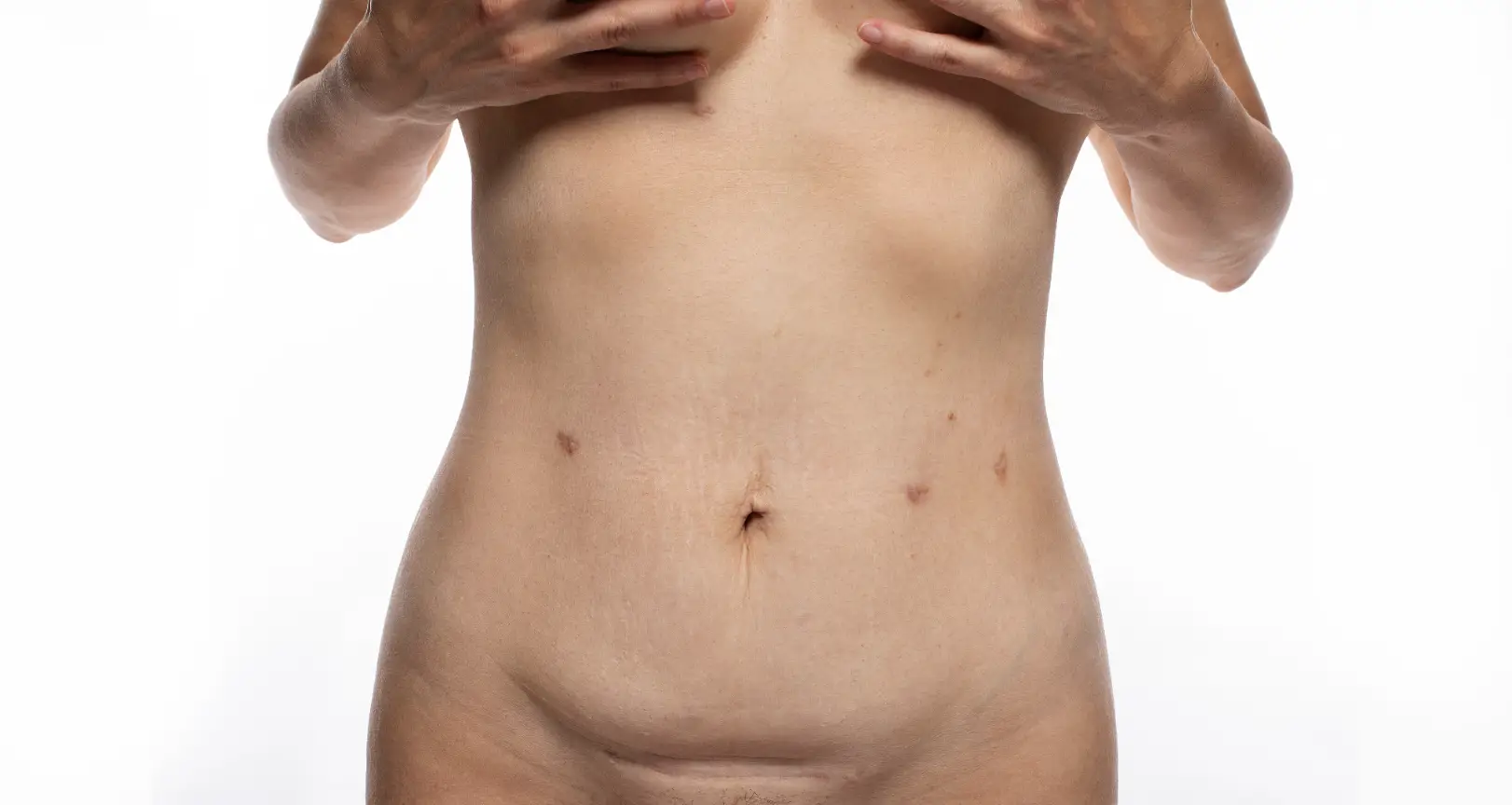
Because an extended tummy tuck treats a wider area, the resulting scar is longer than what you’d see with a standard procedure, typically wrapping from the front of the abdomen around toward the hips.
Surgeons generally aim to position this incision low enough to be hidden beneath underwear or swimwear, though the exact placement depends on your specific anatomy and the extent of correction needed.
Over time, and with proper aftercare, this scar typically fades and flattens, though like any surgical scar, it won’t disappear entirely. It’s worth having a direct conversation with your surgeon about incision placement during your consultation, since seeing exactly where the scar will sit on your body helps set realistic expectations well before surgery day.
Extended Tummy Tuck Cost: What Factors In
Cost is naturally one of the more practical questions on anyone’s mind, so let’s break down what actually influences the final number.
An extended tummy tuck typically costs more than a standard tummy tuck, given the additional surgical time and broader treatment area involved. Beyond the base procedure, your final cost depends on factors like:
- Surgeon’s experience and fees, which vary based on training and reputation
- Facility and anesthesia costs, tied to where and how the surgery is performed
- Combination procedures, such as liposuction, which are sometimes performed alongside an extended tummy tuck
- Geographic location, since costs shift depending on regional market rates
Because so many variables factor into the final price, the only reliable way to get an accurate estimate is through a consultation tailored to your specific surgical plan.
Extended Tummy Tuck vs. Traditional Tummy Tuck: Benefits and Recovery
With the basics covered, it helps to look at how an extended tummy tuck actually compares to the standard version when it comes to what you gain and what recovery involves.
The main benefit of an extended tummy tuck is its broader reach, addressing laxity around the hips and lower back that a standard procedure simply wouldn’t touch. This makes it a more comprehensive solution for patients whose concerns extend beyond the front of the abdomen.
That said, this wider scope generally means a longer recovery period compared to a standard tummy tuck, with most patients needing several weeks before returning to normal activity and a bit longer before resuming more strenuous exercise.
Swelling and tightness are common in the weeks following surgery and typically continue to improve gradually over the following months.
Is an Extended Tummy Tuck Right for You?
Bringing everything together, the decision really comes down to how much of your body’s laxity extends beyond the front of the abdomen.
If your main concern is limited to the area directly in front, a standard tummy tuck may be all you need. But if you’re noticing excess skin wrapping toward your hips or lower back, particularly after major weight loss or multiple pregnancies, an extended tummy tuck is often the more effective option for achieving a smoother, more complete result.
A hands-on evaluation with a qualified surgeon is really the only way to know for sure which category your body falls into.
Taking the Next Step
Deciding between a standard and extended tummy tuck depends entirely on your unique anatomy, and that’s not something to guess at from general online research alone. At Pancholi Cosmetic Surgery in Las Vegas, NV, Dr. Samir Pancholi evaluates each patient’s body individually, offering honest recommendations based on what will actually achieve your goals rather than a one-size-fits-all suggestion.
If you’re ready to find out whether an extended tummy tuck is the right fit for your body, schedule a consultation with us today!